
Keeping a Timber Deck Looking New Through Melbourne Summers
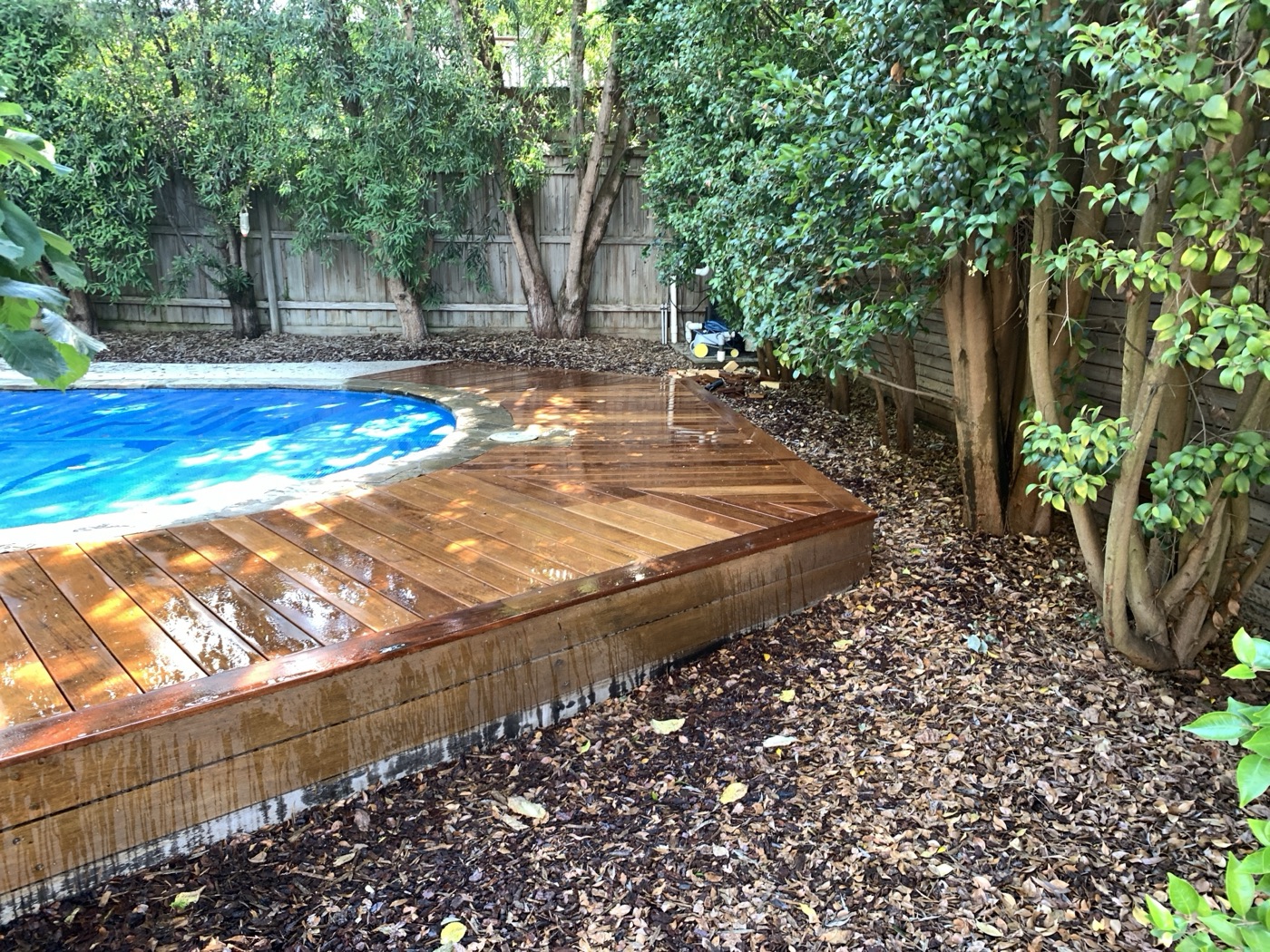
A timber deck is the heart of a Melbourne backyard — until the first run of hot, dry weeks turns it grey, splintery and slippery underfoot. The good news is that the difference between a deck that ages beautifully and one that's tired by its third summer is rarely the timber itself. It's the upkeep. Smart deck maintenance Melbourne homeowners can actually keep on top of comes down to a short, predictable routine timed around our seasons — not a once-a-decade panic when the boards start lifting. Here's how to keep your deck looking new, what our climate does to outdoor timber, and the jobs worth handing to a team before small problems become expensive ones.
Why Melbourne summers are so hard on a timber deck
Outdoor decking lives through everything the weather throws at it, and Melbourne's swing from cool, wet winters to sharp, dry summer heat is about the toughest test a timber board can face. Understanding what's actually happening helps you spot trouble before it shows.
- UV bleaches the colour out. Our strong summer sun breaks down the surface fibres and any unprotected oil, which is why an untreated deck fades to that silvery-grey within a season or two.
- Heat and dryness cause splitting and cupping. When boards dry out fast they shrink, lift at the ends and crack along the grain — the splinters and raised edges you feel barefoot.
- Winter damp invites mould and slip. The same boards then sit shaded and wet through winter, where green mould, algae and black spotting take hold and make the surface dangerously slippery.
- Movement loosens fixings. All that expanding and contracting works screws and nails loose over time, so boards start to rock, squeak or pop their heads up.
None of this means timber is the wrong choice — a well-kept hardwood deck outlasts almost anything. It just means the deck needs you to work with the seasons rather than waiting until it's already gone.
A simple seasonal routine that keeps a deck looking new
You don't need to do everything at once. The trick is little and often, tied to the time of year, so the deck never falls far enough behind to need a full restoration.
Spring — clean and recoat before the heat
This is the most important job of the year. Give the deck a good clean to lift off winter's grime and mould, let it dry properly, then recoat while the timber is thirsty but the weather is still mild. Coating in spring means the protection is on before the harsh summer sun arrives, not after the damage is done.
Summer — sweep, rinse and watch the hot spots
Through the hottest months, keep grit and leaf litter swept off so it doesn't trap moisture or scratch the finish. Move planters and furniture occasionally so the timber underneath doesn't weather unevenly. Keep an eye on the most exposed, north-facing boards — they're the first to fade and tell you when a touch-up is due.
Autumn — clear, inspect and fix small faults
As the leaves drop, clear them before they rot down and stain the boards. This is the right time to walk the deck and check for loose fixings, soft or spongy timber, and any splits worth filling before winter wet gets into them.
Winter — keep it clear and dry where you can
Brush off standing leaves and debris so shaded boards aren't sitting under a wet mat all season. If the deck has gone slippery with algae, a gentle clean now keeps it safe to use and saves a bigger scrub come spring.
The deck-maintenance shortlist
- Once a year: a proper clean and recoat in spring, before summer.
- Every few weeks: sweep off grit, leaves and debris.
- Twice a year: check fixings, splits and any soft timber.
- As needed: treat mould and algae early so the deck stays safe underfoot.
Oil, stain or paint — what should go on a Melbourne deck?
The finish you choose changes both the look and how often you'll be back out there with a brush. There's no single right answer, but there are sensible matches for our climate.
- Decking oil soaks into the timber and feeds it, giving that warm, natural look. It's the easiest to top up — a clean and a fresh coat, no sanding back — but it's also the one that needs doing most often, usually once a year in full Melbourne sun.
- Stain sits more on the surface and offers stronger UV and colour protection, so it holds up longer between coats. It's a good middle ground for an exposed, hard-working deck.
- Paint or solid colour gives the most weather protection and hides older, mismatched timber, but once a deck is painted it's a commitment — it'll peel and flake if it's not kept up, and you can't easily go back to a natural finish.
Whatever you use, two rules hold: prep is everything (a coat over a dirty or damp deck won't last), and don't mix incompatible products — oil over an old stain, for instance, often won't take. If you're unsure what's already on your boards, that's a good moment to get a set of experienced eyes on it.
When maintenance turns into a repair
Some signs mean the deck has moved past a clean-and-coat and needs hands-on work. It's worth knowing them, because catching these early is far cheaper than a rebuild:
- Boards that bounce, rock or feel spongy — often a sign of rot in the board, joist or bearer beneath.
- Popped or rusting fixings that keep working loose no matter how often you screw them back.
- Wide splits, lifting ends or cracked boards that catch feet and won't close up.
- Wobbly handrails, posts or steps — a genuine safety issue, especially on a raised deck.
- Pergola posts or beams showing rot or movement where they meet the deck or the ground.
A deck and its pergola are structural as much as decorative. Once timber is soft or a rail is loose, it's not a cosmetic job any more — it's a job worth doing properly, and one many homeowners would rather hand over than tackle up a ladder on a hot weekend.
How JT handles this
Deck and pergola work is exactly the kind of job that quietly involves several trades at once — carpentry to replace tired boards, fixings and any rotten framing, a clean and recoat to bring the finish back, and often a handrail, step or pergola repair to make it safe. The usual headache is lining all of that up yourself: one person for the timber, another for the coating, nobody owning the finished result.
That's the problem JT was built to remove. As a Melbourne property repairs and maintenance team — one that's grown from a single person to a 24-strong in-house crew in under two years, with a 5.0 Google rating — JT runs the whole deck under one team, one point of contact, one-stop shop. The same crew assesses the timber and structure, swaps out any failed boards or fixings, sorts the pergola and handrails, and finishes with a proper clean and coat so the deck is genuinely done — not half-fixed with a list of jobs left for someone else.
And because renovations take time but your quote shouldn't, you're not left waiting days for a callback. Tell us about your deck and what's bothering you, and you'll get a real, instant quote — so you can get it sorted before the next run of hot weekends, not after.
Why one team for your deck
- One point of contact owns the job from rotten board to final coat.
- Carpentry, repairs, handrails and finishing handled in-house — no subbies to chase.
- Instant quote up front, clear updates through the job, before-and-after photos at the end.
Deck looking tired before summer?
Tell us what's going on with your deck or pergola and get a real price back — often instantly. One team, one point of contact, one-stop shop across Melbourne.