
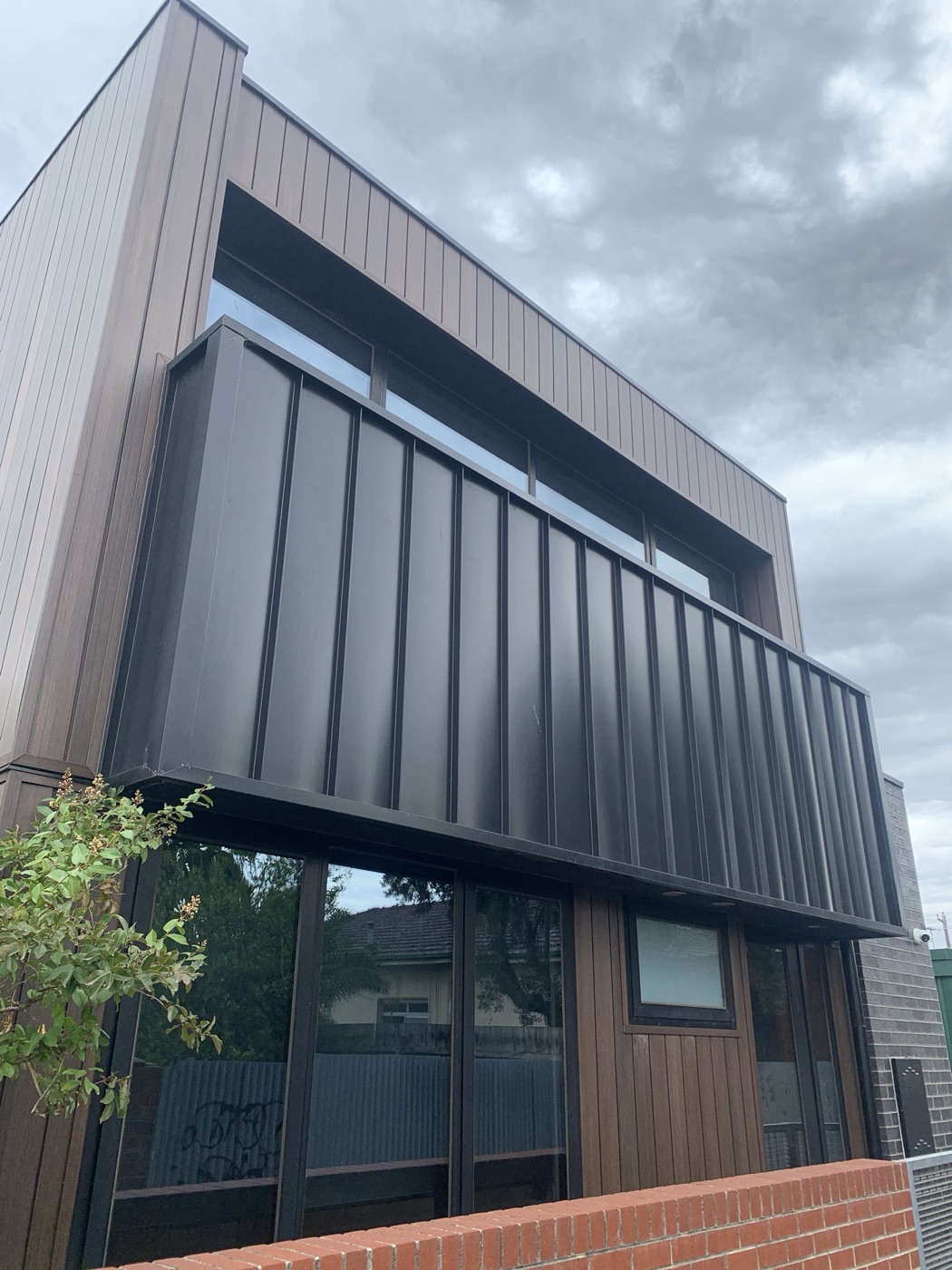
Exterior Cladding and Facade Repairs for Modern Melbourne Homes
Your home's facade is the first thing anyone sees and the first line of defence against Melbourne weather. So when a cladding board lifts, a render crack opens up, or a modern facade panel starts to swell and stain, it's worth dealing with sooner rather than later. This is a plain-English guide to facade repair Melbourne homeowners can actually use: how to spot what's failing on your exterior, why our climate is so hard on it, and when it's a quick fix versus a job that needs a proper crew.
We get called to facade and cladding jobs all over Melbourne — weatherboard cottages in the inner north, rendered townhouses in the south-east, and the newer architectural homes wrapped in fibre-cement, timber-look or composite panels. The pattern is almost always the same: a small problem on the surface that's been quietly letting water in behind it for a while. Catch it early and it's a tidy repair. Leave it and you're paying to fix the wall behind the cladding too.
What your facade is actually made of
Before you can tell whether something's a real problem, it helps to know what you're looking at. Modern Melbourne homes use a handful of common exterior systems, and each one fails in its own way.
The cladding types we see most
- Weatherboards. Timber, fibre-cement (the "Hardie"-style boards) or vinyl. Classic, repairable in sections, but the joints, ends and bottom edges are where moisture gets in.
- Render over brick or blue-board. Acrylic or cement render gives that smooth contemporary look — and cracks, drummy patches and staining are its tell-tale faults.
- Fibre-cement and composite panels. The big flat sheets and architectural panels on a lot of new builds. Problems show up at the joints, express-joint strips and around windows.
- Timber and timber-look cladding. Spotted gum, blackbutt and composite battens look great but move, grey off and need re-coating and re-fixing over time.
- Feature elements. Eaves, fascias, soffits, parapets and entry features that tie the facade together — and often fail first because they cop the most weather.
How to spot a facade that's failing
You don't need to be a builder to read most of these. A slow walk around your home in good light, and again after a downpour, will tell you a lot. Here's what to look for.
Warning signs worth acting on
- Lifting, cupping or loose boards. A weatherboard that's pulled away at the end, or sits proud of the others, is letting water track behind it.
- Cracks in render. Fine hairline cracks are often cosmetic; stepped, diagonal or widening cracks, especially around windows and corners, mean movement or moisture and shouldn't be painted over and ignored.
- Drummy or hollow render. Tap it — a hollow sound means it has lost its bond and will eventually fall off in sheets.
- Swelling, soft or chalky panels. Fibre-cement and composite panels that swell at the edges or feel soft have taken on water at the joints.
- Staining, streaks and mould. Dark runs below joints, windows or the roofline usually mean flashing or sealant has failed and water is getting in.
- Peeling paint and exposed timber. Once the coating goes, Melbourne's wet winters get straight into the timber underneath.
- Gaps at joints and around penetrations. Perished sealant around windows, taps, vents and downpipes is one of the most common entry points for water.
Why Melbourne weather is so hard on facades
Melbourne genuinely earns its "four seasons in one day" reputation, and your facade wears all of it. A hot, dry northerly in the afternoon, a cold southerly change and driving rain by evening — that constant expansion and contraction is exactly what opens joints, cracks render and works boards loose.
Add our damp winters and the way moisture sits against south-facing and shaded walls, and you get the two enemies of any facade: water and movement. Coastal and bayside homes cop salt spray on top of that, which is brutal on coatings and fixings. None of it is a reason to panic — it's just why a Melbourne facade needs the odd bit of attention, and why catching things early matters more here than in a drier climate.
The quick verdict
If the cladding or render has a surface fault but the wall behind feels dry and solid, you're usually in repair-and-recoat territory — fast and affordable. If water has been getting in long enough to soften the substrate, rot framing or blow render off in sheets, the repair has to go deeper. The earlier you act, the smaller the job stays.
What it costs you to wait
A bit of lifted cladding or a render crack feels like a "next year" job — right up until it isn't. On the facade especially, waiting almost always makes the job bigger and the bill larger:
- Water finds the timber behind. The cladding is only the skin. Once water gets past it, it goes after the framing, sarking and insulation you can't see — and that's a far more expensive fix.
- Small cracks become big ones. A hairline render crack lets in water that freezes, expands and lifts more render every season.
- Mould and rot spread. Damp behind cladding doesn't dry out. It moves along the wall and can reach the inside.
- Kerb appeal and value. A tired, stained or patched facade is the first thing buyers and renters judge — and one of the cheapest things to put right before a sale or inspection.
Repair, recoat or replace?
Most facade jobs land in one of three buckets. Knowing roughly which one you're in helps you plan — and helps us give you a straight answer.
A targeted repair
One or two damaged boards, a length of perished sealant, a cracked render patch, a section of failed flashing. The structure behind is sound, so we fix the fault, make it watertight and blend it back in. This is the most common — and the most satisfying — outcome.
A repair and recoat
The cladding or render is sound but the protective coating has had it. Here we make the repairs, then re-seal and repaint the facade so it's protected and looks fresh again. Often the best-value option to reset a whole elevation.
A section replacement
Where boards, panels or render have failed across a larger area, or water has been getting in for years, we replace the affected run properly — fixing anything damaged behind it first, so the new work actually lasts instead of hiding the same problem.
How JT handles facade and cladding jobs
This is exactly the kind of job our one-team model is built for. A failing facade usually needs a carpenter for the boards, someone to handle render and sealing, a painter to recoat, and sometimes a hand with guttering or flashing while everyone's up there. With JT that's not four phone calls — it's one team, one point of contact, one-stop shop, and we own the job from quote to final photo.
- An honest assessment. We tell you straight whether your facade is a quick repair, a recoat, or a section that genuinely needs replacing — we're not here to sell you a re-clad you don't need.
- An instant quote. Renovations take time; your quote shouldn't. Send us a few details and a couple of photos and you can get a real price up front, instead of waiting weeks on a callback.
- Every trade in-house. The same Melbourne crew handles the carpentry, render, sealing and painting in a coordinated run, so the facade is fixed and finished without you chasing anyone.
- Made watertight, then made to look good. We fix the cause first and the appearance second, so the repair holds up to the next Melbourne winter — not just the next inspection.
- Done right, photographed. Every job is completed to a high standard with before-and-after photos, and backed by our workmanship guarantee. If something isn't right, we make it right.
It's the approach that grew JT from one person to a 24-strong in-house team in under two years, and it's why we hold a 5.0 Google rating across Melbourne. Slow is a no-go — especially when there's water getting in behind your cladding.
Cracked render or lifting cladding?
Send us a couple of details and a photo of the facade, and we'll give you a straight repair-or-replace answer and a fast quote. One team, one call, done.