
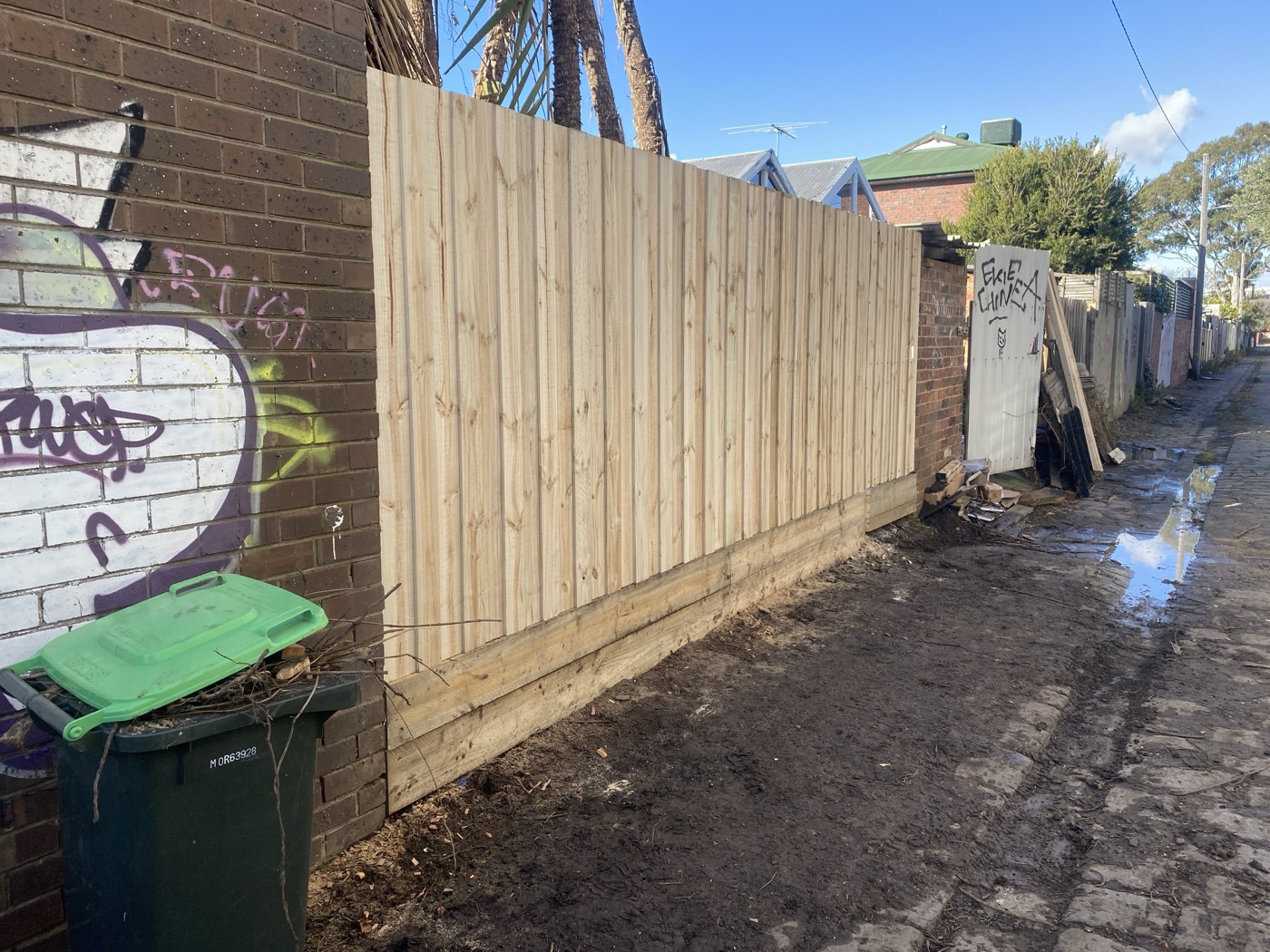
Sagging Gate or Storm-Damaged Fence? Repair vs Replace
A gate that drops on its hinges, a panel that leans after a Melbourne southerly, palings that have gone soft at the base — it's the kind of job homeowners put off for months. The trouble is, a wonky fence rarely fixes itself, and the longer it sits the more it costs you. This is a plain-English guide to fence repair Melbourne homeowners actually need: how to tell whether your fence or gate should be repaired or replaced, and when it's smarter to do which.
We get called out to fencing and gate jobs across Melbourne every week, and almost every one starts with the same question: "Can you just fix it, or do I need a whole new fence?" The honest answer is — it depends on what's failed, and most of the time you can tell which side of the line you're on in about two minutes.
First, what's actually gone wrong?
Before you decide anything, work out what's failed. Fences and gates fail in a handful of predictable ways, and the cause matters more than the symptom.
Common fence and gate problems we see
- The sagging gate. Nine times out of ten this is hinges, fixings, or a post that's moved — not the gate itself. A gate that scrapes the path or won't latch is usually a repair.
- Storm and wind damage. Melbourne's gusty change-of-season weather flattens panels and snaps palings. If the posts held and only the boards or rails copped it, you're often in repair territory.
- Rotten or rusted posts. Timber posts rot at ground level where moisture sits; steel posts rust at the base. A post that wobbles when you push it is the real problem behind most leaning fences.
- White-ant and moisture damage. Soft, crumbly, or hollow-sounding timber means the structure is compromised, not just the look.
- Loose palings and rails. Nails back out, rails pull away. Cheap to fix early, ugly and unsafe if left.
Repair vs replace: the simple test
Here's the rule of thumb we use on the tools. It comes down to the posts — the bones of the fence.
Lean toward a repair when…
- The posts are solid and plumb, and only palings, rails, or a gate have failed.
- The damage is isolated to one or two panels after a storm.
- A gate has dropped but the post it hangs off is sound — new hinges, a brace, or a re-hang fixes it.
- The fence is only a few years old and the rest is in good nick.
Lean toward a replacement when…
- Multiple posts are rotten, rusted, or moving — you can't hang good timber off bad posts.
- More than about a third of the fence is damaged or perished.
- There's widespread white-ant or rot through the structure.
- It's a shared boundary fence near the end of its life and you'd rather not pay twice.
The quick verdict
If the posts are good and the damage is local, repair it — it's faster and cheaper. If the posts are gone or the rot is everywhere, replacing the affected run is the only fix that actually lasts. A patch over a failed structure just brings you back in six months.
What it costs you to wait
A leaning fence or a dropped gate feels like a "later" job until it isn't. Putting it off usually turns a small repair into a bigger one:
- Small problems spread. One rotten post lets the next panel pull and lean. Water gets into more timber. The repair grows.
- Security and pets. A gate that won't latch or a gap in the fence is a problem if you've got kids, dogs, or a pool — and an insurer-relevant one for many homeowners.
- Boundary fences are shared. In Victoria a dividing fence is usually a shared responsibility with your neighbour under the Fences Act, so it pays to sort the conversation (and the quote) before it gets worse.
- Selling soon? A tidy, secure fence is one of the cheapest ways to lift kerb appeal before a sale or rental inspection.
Materials matter in Melbourne
What your fence is made of changes the repair-or-replace call, and Melbourne's climate is hard on a few of them.
Timber paling fences
The Melbourne classic. Palings and rails are easy and affordable to replace in sections, so timber fences are very often repairable — until the posts go. Treated-pine posts set in concrete last a long time; untreated or old posts at ground level are the usual failure point.
Gates of all kinds
Side gates, double gates, and timber-frame gates almost always sag at the hinge side over time. A diagonal brace, heavier-duty hinges, or a fresh re-hang fixes most of them without touching the rest of the fence. A full new gate is only needed when the frame itself has racked or rotted.
Steel and Colorbond
Panels can be swapped individually, but a bent rail or a rusted post usually means replacing that span properly rather than bending it back.
How JT handles fence and gate jobs
This is exactly the kind of job our one-team model is built for. With JT, you're not chasing a fencer, then a handyman, then someone for the gate hardware — it's one team, one point of contact, one-stop shop, and we own the job from quote to final photo.
- An honest repair-or-replace call. We tell you straight whether your fence or gate is a fix or a full replace — we're not interested in selling you a new fence you don't need.
- An instant quote. Renovations take time; your quote shouldn't. You can get a real price up front so you can plan, instead of waiting weeks on a callback that never comes.
- One crew, in-house. The same Melbourne team that fixes your gate can sort the palings, the posts, and any timber or repair work around it in the same visit.
- Done right, photographed. Every job is completed to a high standard with before-and-after photos, and backed by our workmanship guarantee.
It's the approach that grew JT from one person to a 24-strong in-house team in under two years, and it's why we hold a 5.0 Google rating across Melbourne. Slow is a no-go — especially when your gate won't shut.
Sagging gate or storm-hit fence?
Send us a couple of details and we'll give you a straight repair-or-replace answer and a fast quote. One team, one call, done.