
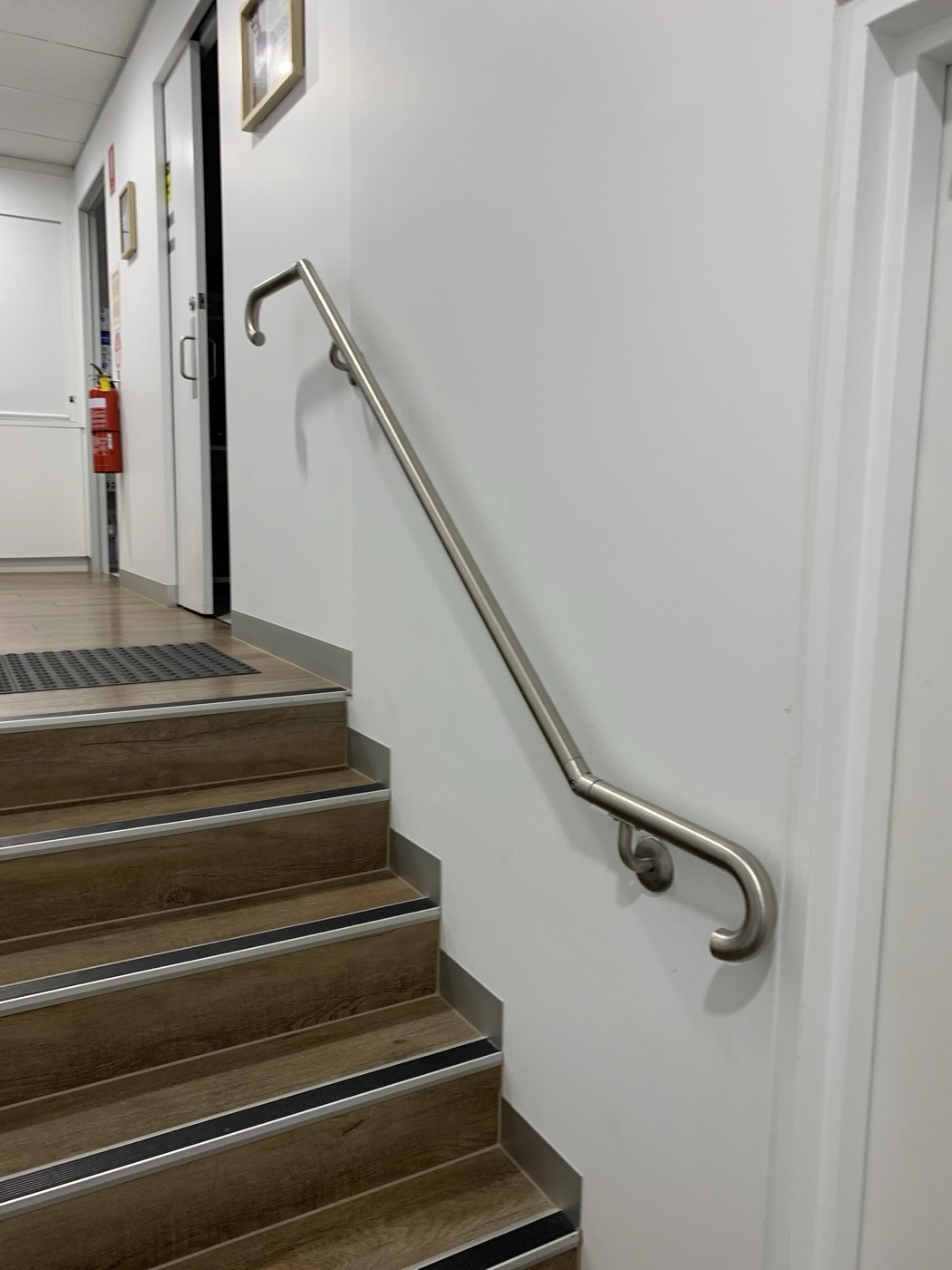
Handrails and Balustrades: Safety, Compliance and a Clean Finish
A loose handrail or a balustrade that's a few centimetres too low looks like a small thing, until a tenant trips on a stairwell or a child leans on a balcony rail. For property managers across Melbourne, handrails and balustrades sit right at the intersection of duty of care, building compliance and the everyday wear that comes with a tenanted property. Getting a quality handrail installation in Melbourne sorted quickly, and to standard, is one of the simplest ways to take a real liability off your plate. Here's what to look for, what the rules actually require, and how to get it fixed without chasing three different trades.
Why handrails and balustrades are a property manager's problem
When you manage a property, you carry a practical duty to keep common areas and tenanted spaces reasonably safe. Stairs, landings, decks, balconies and ramps are exactly where people fall, and where a failed rail turns an incident into a claim. A handrail that pulls away from the wall, a balustrade with a wobbly post, or a gap a small child can slip through aren't cosmetic faults; they're the kind of defect that gets named in an insurance assessment or a tribunal matter after the fact.
The frustrating part is that these jobs sit in an awkward middle ground. They're too involved for a quick DIY fix but too small to attract a big builder's attention, so they get deferred. Deferring them is the risk. The fix itself is usually straightforward when you've got the right team on it.
Where the rules require a handrail or balustrade
Australia's National Construction Code sets out where barriers and handrails are required, and the dimensions they have to meet. You don't need to memorise the code, but it helps to know the broad triggers so you can spot a non-compliant rail before someone else does.
The common compliance triggers
- Drops of one metre or more typically need a barrier or balustrade, on balconies, decks, landings, mezzanines and the open side of stairs.
- Stairs generally need a handrail where there's a continuous run of steps, sized and positioned so it's actually usable to grip.
- Balustrade height is specified in the code, and rails that were fine decades ago are often below today's required height.
- Gaps between balusters are limited so a small child can't pass through or get a head stuck, a frequent failure in older rental stock.
- Climbable elements, like horizontal rails a child can use as a ladder, are restricted in certain zones near a drop.
Older Melbourne homes, period conversions and many walk-up apartment blocks were built to earlier standards. That doesn't mean every old rail is illegal, but the moment you repair, alter or replace one, the work should be brought up to current requirements. If you're unsure whether a particular rail complies, a building surveyor makes the formal call, and JT can carry out the repair to spec once you know what's needed.
The faults we see most often in Melbourne properties
Across the repair and maintenance work JT does around Melbourne, a handful of handrail and balustrade problems come up again and again. If you manage a portfolio, this is a useful checklist to walk a property with.
- Loose fixings. Brackets pulling out of plaster or rotten timber, the single most common and most dangerous fault, because the rail looks fine until weight goes on it.
- Rust and corrosion. External steel and wrought-iron rails on Melbourne's older terraces weep rust at the joints and weaken from the inside.
- Rotten timber posts. Deck and verandah balustrade posts that have wicked up moisture at the base and lost their grip.
- Low or wide-gapped balustrades. Rails that sit below current height, or have gaps wide enough to be a hazard, especially on balconies and stair openings.
- Missing returns and continuity. Handrails that stop short of the top or bottom step, or don't run continuously, so they're not actually there when someone needs them.
- Wobbly glass and wire balustrade. Tensioned wire that's gone slack, or glass panels with failed spigots, common in newer apartments and townhouses.
Repair, or replace? How to decide
Not every fault needs a full replacement, and a good handyman team will tell you when it doesn't. A solid timber rail with one rotten post can often be repaired for a fraction of a rebuild. A corroded steel rail that's failing at multiple joints, or a balustrade that's fundamentally too low, usually needs replacing because patching it won't make it compliant or lasting.
Lean toward repair when
- The structure is sound and only the fixings or one element have failed.
- The rail already meets current height and gap requirements.
- It's a quick make-safe ahead of a planned larger works program.
Lean toward replacement when
- The rail is below current compliance height or has non-compliant gaps.
- Corrosion or rot is widespread rather than isolated.
- You're upgrading a balcony, deck or stairwell anyway and it makes sense to do it once.
The honest answer often sits in the middle, and the value of having one team assess it is that you get a straight recommendation rather than a quote padded toward whatever's most profitable.
How JT handles this
This is exactly the kind of job JT was built for. A handrail repair touches carpentry, sometimes welding or metal fixing, plastering to make good around brackets, and a clean coat of paint or finish at the end. On most jobs that's three or four different trades. With JT it's one team, one point of contact, one-stop shop, every trade handled in-house, so you brief it once and we own the outcome from quote to final photo.
For a property manager that means no juggling a carpenter, a painter and a fixer on three separate threads, and no finger-pointing when something needs making good. You get one person who knows the whole job, keeps you and the tenant informed, and turns up when they say they will. JT has grown from one person to a 24-strong in-house team in under two years and holds a 5.0 Google rating, because we built the business around the parts of trade work that usually go wrong: communication and follow-through.
And because renovations take time but your quote shouldn't, we keep quoting fast. Send through the job and you'll often get a price back the same day, so a safety repair doesn't sit in a queue while the liability stays on the property. Slow is a no-go, especially when someone could be hurt in the meantime.
Got a loose rail or a balustrade you're not sure about?
Get it assessed and fixed by one Melbourne team that handles the whole job, compliant, photographed and done right. Quotes are fast, often instant.