
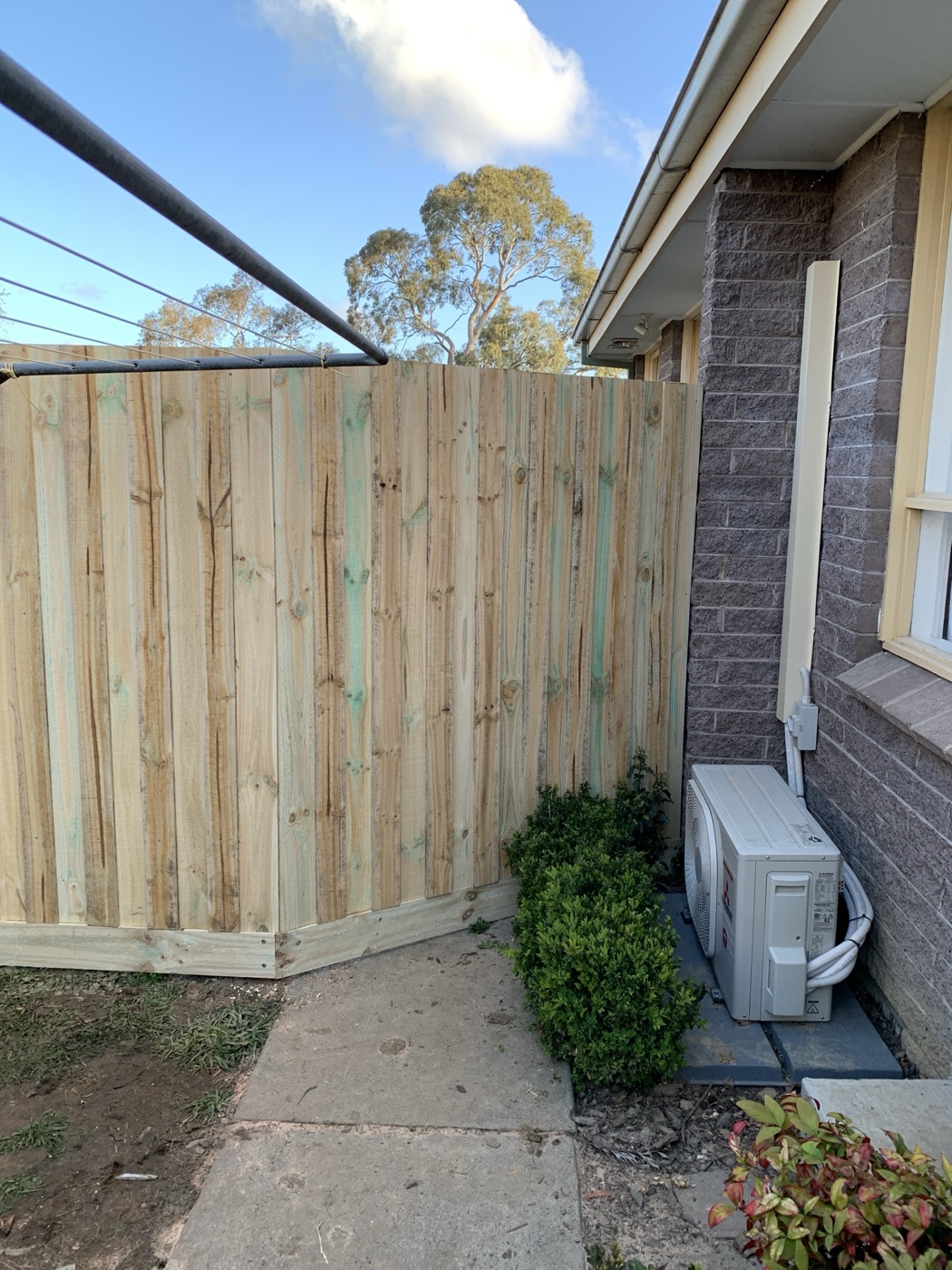
New Timber Fence in Melbourne: Styles, Costs and Council Rules
A leaning, grey, half-rotten boundary fence is one of those jobs that sits on the to-do list for years. Then a storm rolls through, a paling pops off, the dog gets out — and suddenly it's urgent. If you're looking at a new timber fence in Melbourne, the hard part usually isn't the timber. It's working out which style suits your home, what it should honestly cost, who pays for it, and whether you need to tell the council or your neighbour first. This guide walks a homeowner through all of it, so you can make the call with your eyes open instead of guessing.
Timber fence styles homeowners actually choose
"Timber fence" covers a lot of ground. The style you pick changes the price, the privacy and how the front of your home reads from the street. These are the ones we build most often around Melbourne:
- Lapped & capped paling — overlapping palings with a top capping rail. The classic, tidy Melbourne backyard boundary. Great privacy, clean lines, no gaps.
- Standard butted paling — palings sit side by side. The most economical full-height fence, and what most older homes already have.
- Horizontal slat / "modern slat" — spaced horizontal boards for a contemporary, architectural look. Popular for front fences and feature sections; uses more timber, so it costs more.
- Picket fences — lower, traditional, period-home front fences. More about street appeal than privacy.
- Paling with a lattice or slat topper — a full paling fence with an open top section to lift the height and add light without going fully solid.
Treated pine vs hardwood
Most paling fences in Melbourne use treated pine — durable, cost-effective and the standard choice for boundaries. Hardwood (merbau, spotted gum and similar) costs more but looks premium and is common on front and feature fences where the timber is on show. A smart middle ground we use a lot is treated-pine palings on a hardwood or steel-supported frame: it keeps the price sensible while the structure outlasts the boards.
What a new timber fence costs in Melbourne
Fencing is almost always priced per metre, and the honest answer is "it depends" — on height, style, timber, how much old fence has to come out, and the state of the ground. Sloping blocks, rock, tree roots and removing concrete-set posts all add labour. As a rough guide for a standard full-height boundary fence:
| Style | Typical guide (per metre, supplied & installed) |
|---|---|
| Butted paling (treated pine) | Entry-level full-height boundary |
| Lapped & capped paling | A step up — neater, more solid, very popular |
| Horizontal slat (treated pine) | More timber and labour — mid to upper range |
| Hardwood feature / front fence | Premium timber — top of the range |
We've kept the figures as relative tiers on purpose — real prices move with timber costs, site access and the length of the run. The only number worth acting on is a quote against your actual fence, which is exactly what our instant quote gives you.
Watch for the extras that quietly push a fence price up:
- Removal and disposal of the old fence — almost always a separate line.
- Slope and stepping — a fence that steps down a sloping block takes more work.
- Gates — a timber gate, frame and hardware add to a per-metre price.
- Hard digging — clay, rock or old concrete footings slow the post holes right down.
Council rules and the Fences Act — what to check first
In Victoria most standard dividing fences don't need a planning permit, but there are real rules you can't skip — and getting them wrong is how a brand-new fence ends up in a neighbour dispute. The things to check before you build:
- Height. Many Melbourne councils treat fences up to around 2 metres on a side or rear boundary, and lower at the front, as exempt from a planning permit — but front-fence and height limits vary by council and overlay, so confirm with yours before you commit.
- Heritage and design overlays. If your property is in a heritage area, a front fence can need a permit and has to suit the period. This catches a lot of inner-Melbourne owners by surprise.
- Corner blocks and sightlines. Fences near a driveway or intersection may be height- limited so they don't block visibility.
- The boundary itself. Don't assume the old fence is on the line. If there's any doubt, it's worth confirming where the boundary actually sits before you set posts.
The dividing-fence and neighbour rules
A boundary fence is shared property, and Victoria's Fences Act sets out how it works. The short version every homeowner should know:
- Adjoining owners are generally expected to share the cost of a "sufficient" dividing fence equally.
- If you want the work done, you usually serve your neighbour a fencing notice with the proposed work and costs before starting.
- If you want something fancier than a standard fence, you can usually do it — but you may have to cover the extra above what a basic sufficient fence would have cost.
- If a neighbour won't engage or can't be found, there are set processes to follow. It pays to keep it friendly and in writing.
None of this is legal advice — for a contested boundary or a tricky neighbour it's worth a quick check with your council or the Dispute Settlement Centre of Victoria. But for the everyday "our fence is falling down and we both want it replaced" case, a notice and a fair split is all most Melbourne homeowners ever need.
How JT handles a new timber fence
Here's where most fence jobs go sideways: you're chasing a fencer for a quote, coordinating the old-fence removal yourself, and then realising the gate, the rubbish run and that one rotten post near the house are all "someone else's" problem. JT is built to take that off your plate. We're a Melbourne property repairs and maintenance team that's grown from one person to 24 in-house staff in under two years, with a 5.0 Google rating, by doing exactly this — being the one team and one point of contact for the whole job.
- One quote, the whole job. Removal, disposal, new fence, gates and any nearby repairs — priced together, not as four separate trades to chase.
- An instant quote. You answer a few quick questions and get a real price based on our pricing on the spot. Renovations take time; your quote shouldn't.
- Our own crew. The team that quotes is the team that builds — no subbies to chase, no finger-pointing if something's off.
- Done right and photographed. Posts set properly, palings true, capping clean — with before/after photos so the work speaks for itself.
And because we already handle carpentry, painting, gates and general repairs in-house, the small extras that always come up with a fence — a sticking gate, a section of decking, a tidy-up where the old fence sat — get sorted in the same visit instead of becoming another job to book.
The quick checklist before you build
- Pick a style and timber that suit the home and the budget.
- Confirm height and any heritage/overlay rules with your council.
- Talk to the neighbour early and put the shared fence in writing.
- Get a real, itemised quote that includes removal, disposal and gates.
- Use a team that owns the whole job from quote to final photo.
Get a price on your new timber fence today
One team, one point of contact, and a quote that's often instant. Tell us about your fence and we'll come back with a real number — no chasing four trades, no waiting weeks.