
Panelling & Joinery
VJ Panelling and Feature Walls: An Affordable Way to Lift a Room
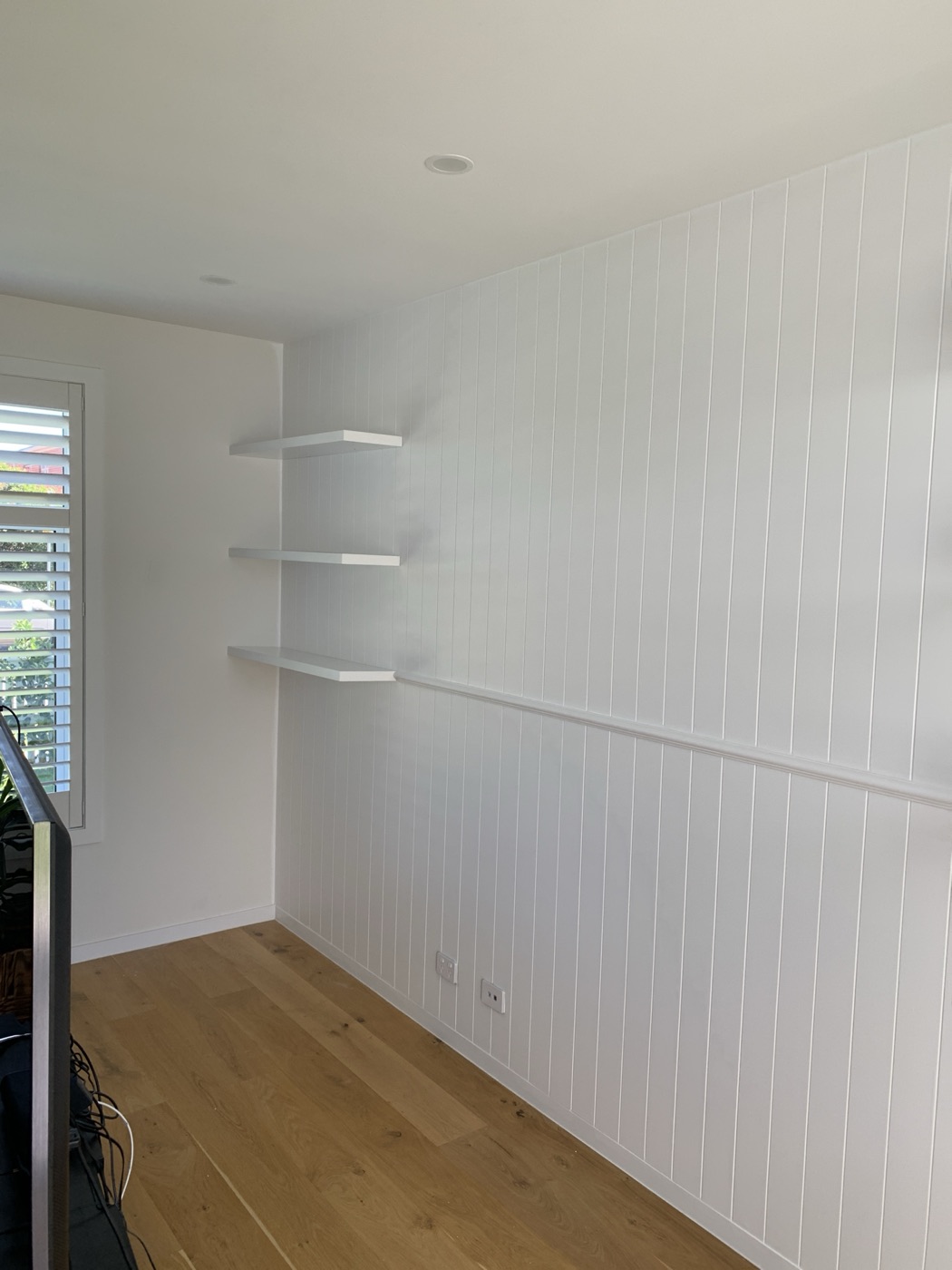
You walk into the living room every day and it's… fine. The walls are flat, the paint's okay, nothing's wrong — but nothing makes you stop and go "that looks great" either. You've scrolled through new kitchens and full repaints and they all land in the thousands, and the room stays flat. Here's the open secret: one of the highest-impact, lowest-cost changes you can make to a tired room is VJ panelling. For a fraction of a renovation, a feature wall gives a hallway, bedroom or entry instant character. VJ panelling in Melbourne homes has gone from a heritage detail to one of the most-requested jobs we do — and done well, it lifts a whole room.
This guide is for homeowners weighing it up: what VJ panelling actually is, where it works (and where it doesn't), what it costs to do properly, and how to get the finish you saw on the internet rather than a wonky DIY version that has to come back off. It's grounded in the panelling and joinery work the JT team does across Melbourne homes — from inner-north period terraces in Thornbury and Brunswick to brick-veneer homes out in the suburbs.
What is VJ panelling, exactly?
VJ stands for "vertical joint" — the term comes from the neat V-shaped groove between each board. Originally it was solid tongue-and-groove timber lining, the kind you'll still find on the walls and ceilings of old Melbourne weatherboards and Queenslanders. Today most VJ panelling is supplied as wide, pre-grooved MDF or ply sheets that mimic that look — cheaper, faster to fit, and dead straight.
It reads as character without reading as old. That's why it suits both a 1920s Californian bungalow and a brand-new build. A few things people get it confused with:
- VJ panelling — those evenly spaced vertical grooves. Classic, calm, the most versatile.
- Shaker / box panelling — slim timber mouldings forming squares or rectangles on the wall. More formal, great for hallways and stairwells.
- Battens / slat walls — raised vertical timber strips with shadow gaps. Warmer, more contemporary, often used behind a bedhead or in a media wall.
All three are "feature wall" jobs and all three live in the same panelling-and-joinery wheelhouse. The right one for you comes down to the age of the home and the feeling you're after.
Why it's such an affordable way to lift a room
The reason panelling punches so far above its price is that it changes the thing your eye lands on first — a whole wall — without touching plumbing, electrical or structure. Compared with a repaint of the entire room or a full reno, you're spending a little to change a lot. What you get for the money:
- Instant depth and texture. A flat painted wall is forgettable; a grooved or panelled one catches light and shadow and gives the room a focal point.
- Heritage character on a new wall. Panelling makes a plain brick-veneer room feel like it has history, which is hard to buy any other way.
- It hides imperfections. Tired, patched or uneven plaster disappears behind a clean panelled surface.
- It's a feature, not a renovation. One wall, a day or two on site, and the room photographs and lives completely differently.
Where the value really shows: the rooms you walk through, not just sit in. A panelled entry or hallway is the first thing you and your guests see, so a small spend there changes the feel of the whole home — and it's exactly the kind of high-impact, low-cost job that lifts a property before a sale or a lease, too.
Where VJ panelling works best in a Melbourne home
It's not a "stick it everywhere" job — panelling has hero spots where it earns its keep, and a few places it's better left out of.
The rooms that love it
- Entries and hallways. A panelled feature wall or a dado of board-and-batten down a hallway sets the tone the moment the front door opens.
- Bedrooms. A full-height feature wall behind the bed instantly makes a plain bedroom feel designed.
- Living and dining. Panelling around a TV, behind a buffet, or as a single accent wall gives the main room a backbone.
- Stairwells and voids. Tall, otherwise-dead wall space is where box and shaker panelling looks most expensive.
- Powder rooms. A small room is cheap to panel and the payoff is huge — it's the easiest "wow" in the house.
Where to be careful
- Wet zones. Around showers and splashes you need the right substrate and sealing, or moisture gets behind it. This is a job for someone who knows the materials, not a weekend punt.
- Already-busy rooms. If the floor, furniture and curtains are all loud, one more texture tips it over. Panelling shines against calm surroundings.
- Walls full of services. Switches, points, vents and pipework all need to be worked around cleanly — sloppy cut-outs are the dead giveaway of a rushed job.
What it costs — and what makes a panelling job good or bad
Honest answer: it varies, because "a feature wall" can mean a single small accent wall or a full hallway in detailed box panelling, and the difference between a cheap job and a great one is almost entirely in the prep and the finish, not the boards. The materials are rarely the expensive part. What you're really paying for is the work that makes it look built-in rather than stuck-on.
The things that separate a panelling job that looks fantastic from one that looks DIY:
- Dead-level setting-out. Walls and floors are never perfectly square. A good fitter scribes and packs so the grooves run true and the panels sit flush — get this wrong and every line in the room looks crooked.
- Clean cut-outs. Power points, switches and skirting all need crisp, tight cuts. Gappy cut-outs are the number-one tell of a rushed job.
- Proper fixing and adhesive. Panels that aren't fixed and glued correctly bow, lift at the edges or pop over time.
- Filling, caulking and a sprayed-or-rolled finish. Nail holes filled, joins caulked, edges sealed and painted properly is what makes panelling read as one solid, custom wall.
- The trim and joinery around it. Where panelling meets a built-in shelf, a window reveal or a skirting, the join has to be tidy — that's where panelling becomes joinery.
That last point is why panelling so often comes bundled with joinery: people want the panelled wall and a set of built-in shelves, a window seat, or a media unit that ties into it. Done as one coordinated job, it looks like it was always part of the house. Done as two separate trades, the joins never quite line up.
Should you DIY it or get someone in?
A single small accent wall in a square room is a fair weekend project if you're genuinely handy with a level, a saw and a caulking gun. Where homeowners come unstuck is the things that don't show up in a tutorial: an out-of-square room, skirting and architraves that have to be removed and refitted, electrical points to work around, and the filling-and-painting that makes the whole thing disappear into one clean surface.
It's worth getting a professional in when:
- The wall is tall, in a stairwell, or full of power points and switches.
- You want box or shaker panelling, where every mitre and spacing has to be exact.
- You want built-in shelving, a bench or joinery tied into the panelling.
- It's a wet or semi-wet area that needs the right materials and sealing.
- You want it to look genuinely built-in — not "we panelled a wall on the weekend."
How JT handles VJ panelling and feature walls in Melbourne
Panelling and joinery is exactly the kind of work the JT team does across Melbourne — grounded in real jobs, not guesswork. Because every trade is in-house, the panelling, the carpentry, the joinery and the painting that finishes it all come from one crew, so the lines actually line up. Here's what makes it painless from your side:
- One team, one point of contact. Your feature wall might also want a built-in shelf, a point moved, or a wall patched first. You don't go hunting for three trades — JT runs every trade in-house, so one team and one person owns the whole job from quote to final photo.
- An honest steer on the design. We'll tell you which panelling suits your home and which wall will give you the biggest lift for the least spend, rather than upselling you a wall that won't earn it.
- A built-in finish, not a stuck-on one. Level setting-out, clean cut-outs, filled, caulked and painted — so it reads as part of the house, not an add-on.
- An instant quote. Renovations take time; your quote shouldn't. Send us a photo of the wall and the look you're after, and you'll often have a real price back on the spot.
It's the same approach that grew JT from one person to a 24-strong in-house team in under two years, with a 5.0 Google rating to match. One team. One point of contact. One-stop shop.
The bottom line
If a room feels flat and a full renovation feels like overkill, a panelled feature wall is the move. It's one of the cheapest ways to give a hallway, bedroom or entry real character — as long as it's set out level, cut in cleanly and finished so it disappears into one solid wall. Pick the right wall, the right style for your home, and the right hands to fit it, and a tired room looks like a designed one. If you're not sure which wall or which style, send a photo and a quick description — you'll get a clear steer and a real price, no pressure.