
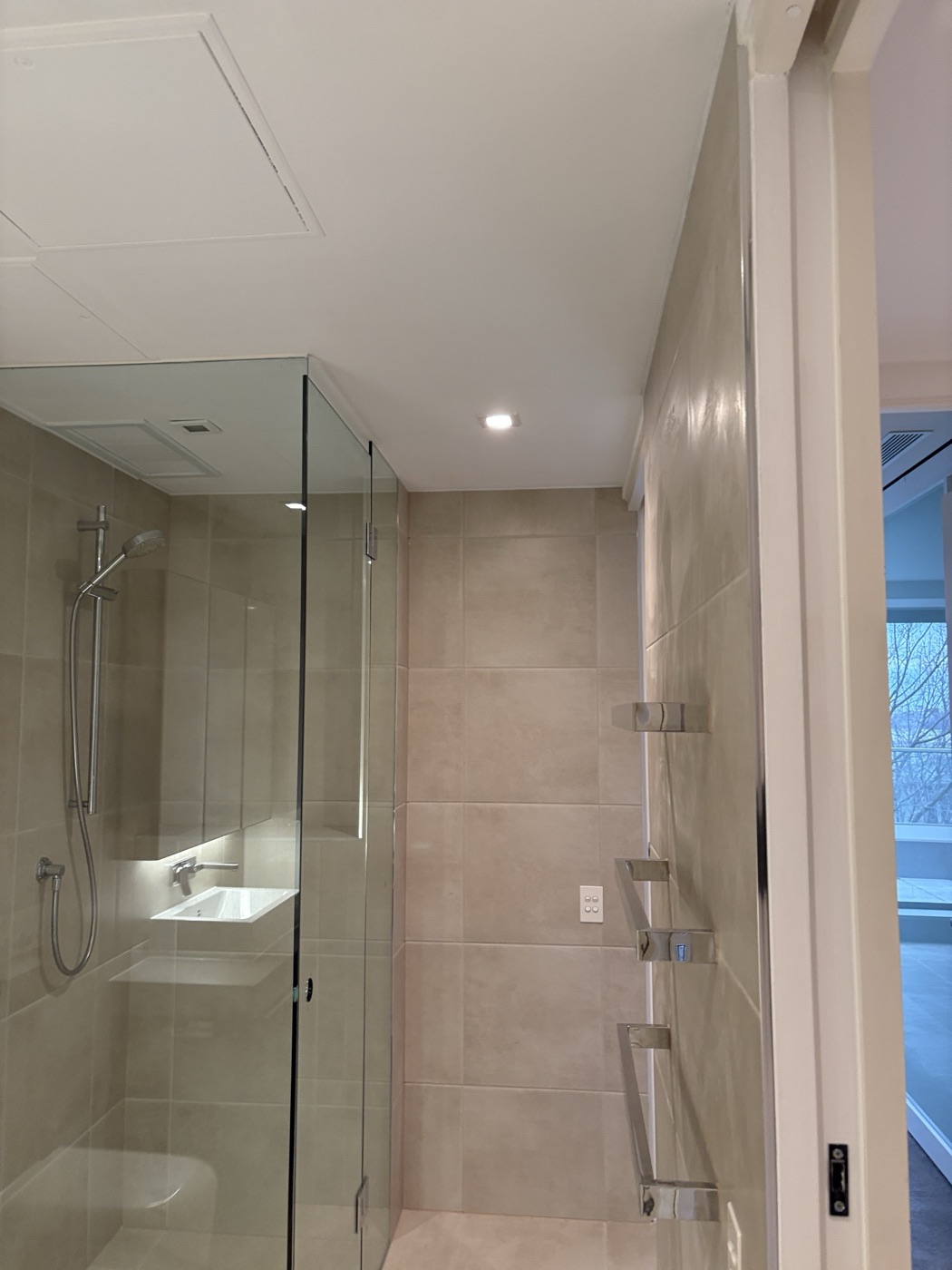
Shower Leaking? Here's How JT Finds and Fixes the Cause Fast
A damp patch on the ceiling below the bathroom, a musty smell that won't go away, grout that's gone soft underfoot — a leaking shower rarely announces itself where the actual problem is. By the time you can see it, water has usually been finding its way somewhere it shouldn't for a while. The good news: most shower leaks come down to one of a handful of usual suspects, and finding the real cause is what actually stops it coming back.
Where shower leaks actually start
Tiles themselves are rarely the problem — what's underneath them almost always is. A few of the most common culprits:
- Failed waterproofing membrane. Every shower has a waterproof layer under the tiles. Once it's compromised — from age, movement, or a botched original install — water gets behind the tiles no matter how good the grout looks on the surface.
- Cracked grout or silicone. The easiest to spot and often the least serious, but if left too long, water tracking through a hairline crack can eventually reach the membrane underneath.
- A failing shower screen seal. Water escaping around the base or edge of the screen rather than draining properly, slowly saturating the floor just outside the shower recess.
- A blocked or poorly graded drain. If water isn't draining as fast as it should, it sits longer than it's meant to, finding every weak point on its way down.
Why "just regrout it" doesn't always fix the problem
Regrouting is a common first fix, and sometimes it's exactly the right one — if the grout itself was the actual source. But if the real issue is a failed membrane underneath, fresh grout on top just hides the symptom for a few more months while the same water keeps finding its way through. That's the frustrating pattern property owners describe most often: paying to fix the same leak two or three times because nobody actually traced it back to the source the first time.
How we actually find the source
Before we recommend a fix, we work out what's actually causing the leak — not just where the water is showing up.
- Check the obvious first. Grout condition, silicone seals, and the shower screen or door seal — sometimes the fix really is this simple.
- Test the waterproofing. If the surface looks fine but the leak persists, the membrane underneath is the next place to look.
- Trace where the water is actually travelling. A leak can show up on a ceiling or wall well away from the shower itself, since water follows gravity and structure, not a straight line down.
- Check the drain and fall. A shower floor that doesn't drain properly keeps water sitting longer than it should, stressing the waterproofing over time even if nothing's technically broken yet.
Once we know the actual cause, we can tell you honestly whether it's a same-day regrout and reseal, or a proper re-waterproof and retile — rather than guessing and hoping it holds.
Regrout, or full retile?
This is the question every homeowner with a leaking shower eventually asks, and the honest answer depends entirely on what's actually failed. If the tiles and membrane underneath are sound and it's genuinely a grout or silicone issue, a regrout and reseal is a fast, affordable fix. If the membrane itself has failed, no amount of surface work will stop it — that job needs the tiles removed, the membrane properly redone, and everything retiled and resealed from the ground up.
Neither answer is the "wrong" one to want — the goal is just getting an honest assessment before spending money on the wrong fix.
How JT handles a leaking shower
This is exactly the kind of job where doing it once, properly, saves you money over time.
- We trace the actual cause before recommending a fix — not just patching where the water happens to be visible.
- Every trade in-house. Tiling, waterproofing and any plumbing the job needs are handled by the same JT crew, with no separate contractors to coordinate.
- An honest quote, fast. You get a real price for the actual scope of work needed, often on the spot.
- Before-and-after photos so you can see exactly what was found and what was done to fix it.
If your shower's been leaking — or you've fixed it once already and it's back — the fastest way to actually stop it for good is to get someone in who traces the cause properly the first time.