
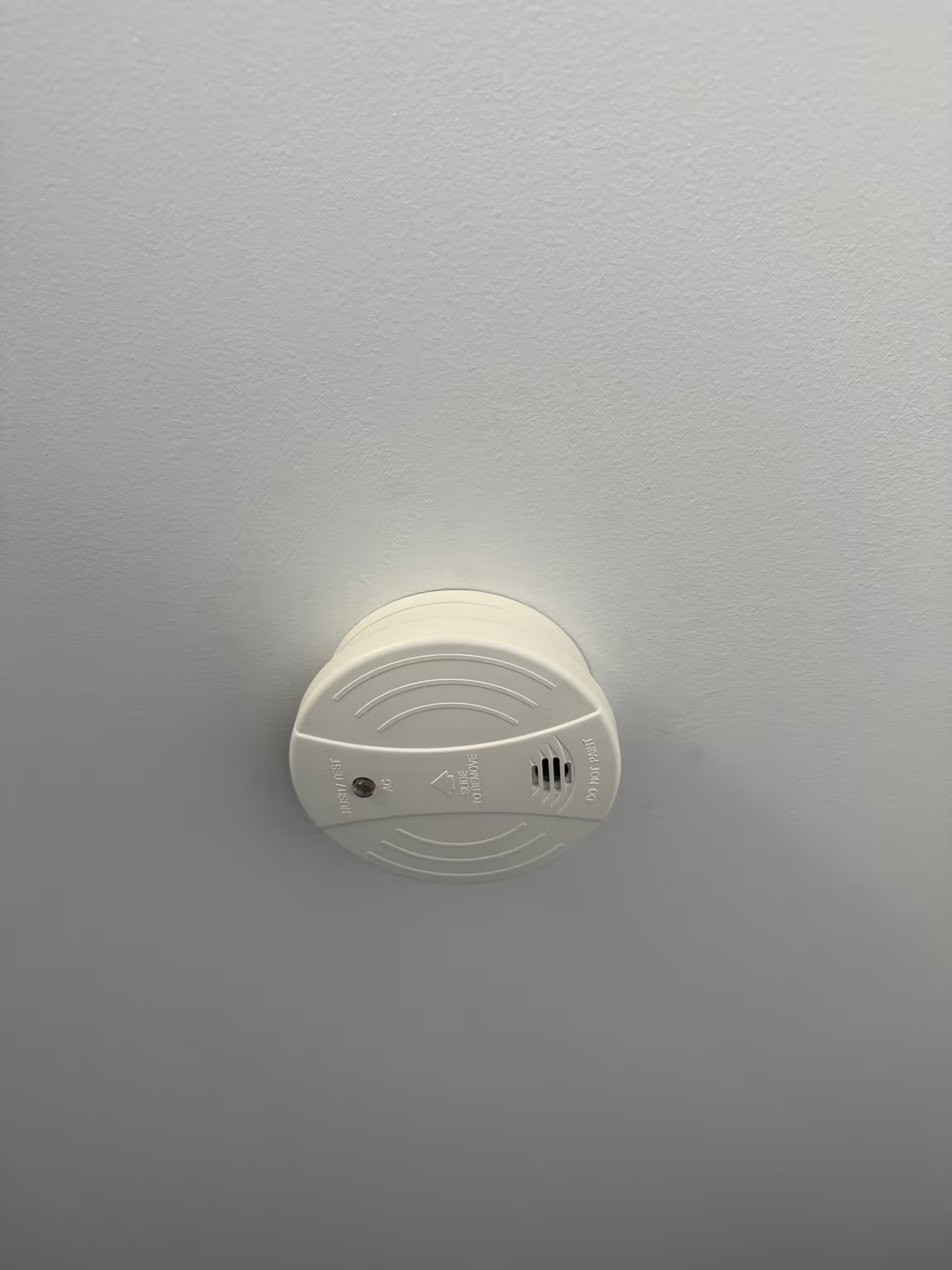
Smoke Alarm Compliance: What Melbourne Property Managers Need to Know
Smoke alarm compliance is one area of property management with genuinely no room for shortcuts — the requirements exist for real safety reasons, and non-compliance carries real risk both for tenant safety and for the property manager or owner's liability. Here's what actually needs to be in place across a portfolio.
What compliance generally requires
- Correctly located alarms — typically required on each level of a property and outside sleeping areas, though exact placement requirements can vary by property layout.
- Working alarms, tested regularly, not just installed and forgotten — a smoke alarm with a flat or missing battery provides no protection at all.
- Alarms replaced within their service life, since smoke alarms have a limited effective lifespan (commonly around a decade) even when they appear to be functioning.
- Photoelectric alarms increasingly required over older ionisation-type alarms in many jurisdictions, due to better performance detecting smouldering fires.
Why this matters more for a portfolio
Across a portfolio of properties, smoke alarm compliance isn't a one-time task — it's an ongoing responsibility across every property, every tenancy change, and every alarm's individual service life. A single missed or expired alarm at one property is a real liability exposure, and manually tracking alarm age and test dates across dozens of properties without a system is genuinely difficult to do reliably.
Common compliance gaps
- Alarms present but past their effective service life without anyone tracking the installation date.
- Alarms in the wrong locations relative to current requirements, particularly in older properties that predate current standards.
- Battery-only alarms where a hardwired or interconnected system may now be required.
- No documented record of testing, which becomes a real problem if compliance is ever questioned after an incident.
How JT supports property managers with compliance
- Smoke alarm checks and replacement as part of routine maintenance visits, not a separate booking.
- Correct placement assessment, particularly valuable for older properties that may not meet current standards.
- One consistent team across your whole portfolio, so compliance work is handled the same way at every property.
- Documentation of work completed, giving you a record to reference if compliance is ever questioned.
If you're managing smoke alarm compliance across multiple properties, having one team handle it consistently — rather than tracking it separately at each property — is genuinely the most reliable way to stay on top of it.
Need compliance sorted across your portfolio?
One team, consistent checks, documented work — quoted fast, often instant.