
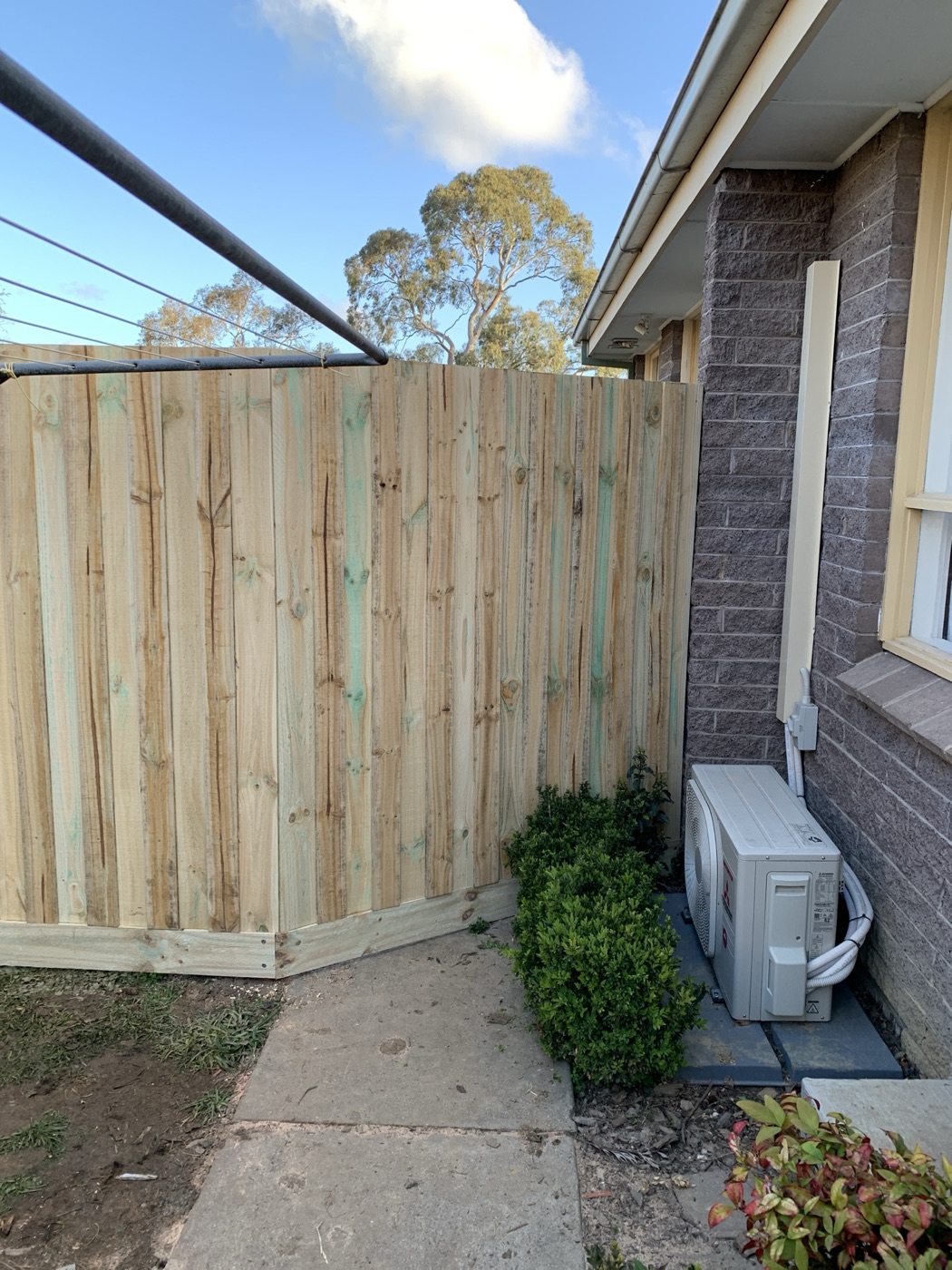
Timber Paling Fence: Repair or Full Replacement?
A few split or missing palings, a section leaning after a windy week, gaps where timber has rotted at ground level — a paling fence rarely fails all at once, which makes the repair-or-replace decision genuinely tricky. Here's how to actually work it out.
Signs a repair will do
- Isolated damaged palings, with the rest of the fence still sound — these can usually be individually replaced without touching anything else.
- Posts that are still solid at ground level, even if some palings attached to them need work.
- A section that's leaning but the timber itself isn't rotted — often a post that's worked loose in the ground rather than failed timber, fixable by resetting rather than replacing.
- Overall the fence is straight and structurally sound, just showing cosmetic wear or a handful of problem spots.
Signs it's time for full replacement
- Multiple posts rotted at ground level, which is where timber posts fail first due to constant ground moisture — once several are gone, patching individual sections doesn't address the underlying issue.
- Widespread paling deterioration across most of the fence, not just a few isolated spots — at that point, individual replacement starts costing close to what a full rebuild would.
- The fence is significantly out of alignment along its whole length, suggesting a systemic issue rather than a localised one.
- You want to change the fence height, style or boundary line — a genuine design change, not just a repair.
Why ground-level rot happens
Timber posts fail at ground level because that's where the timber sits in constant contact with damp soil, while the section above ground dries out between rain. This uneven moisture exposure is what causes the base to rot years before the rest of the post shows any wear — which is why a fence can look perfectly fine above ground while genuinely failing right at the base.
What a repair actually involves
Individual paling replacement is straightforward — matching timber type and weathering as closely as possible so the repair doesn't stand out starkly against older, greyed timber. Resetting a leaning post means digging out the base, checking for rot, and re-setting it properly in fresh concrete if needed. Both are quick jobs when the underlying structure is sound.
How JT approaches fence repair and replacement
- Honest assessment of posts first, since that's what actually determines repair versus replace.
- Timber matching for repairs, so patched sections blend rather than stand out.
- Proper post-setting for replacements, at correct depth in solid concrete footings.
- Real, often-instant quotes for whichever your fence genuinely needs.
If your fence has a few problem spots, it's very likely repairable — worth a proper look at the posts before assuming the whole thing needs to come down.
Fence seen better days?
Honest repair-vs-replace advice, quoted fast — often instant.