
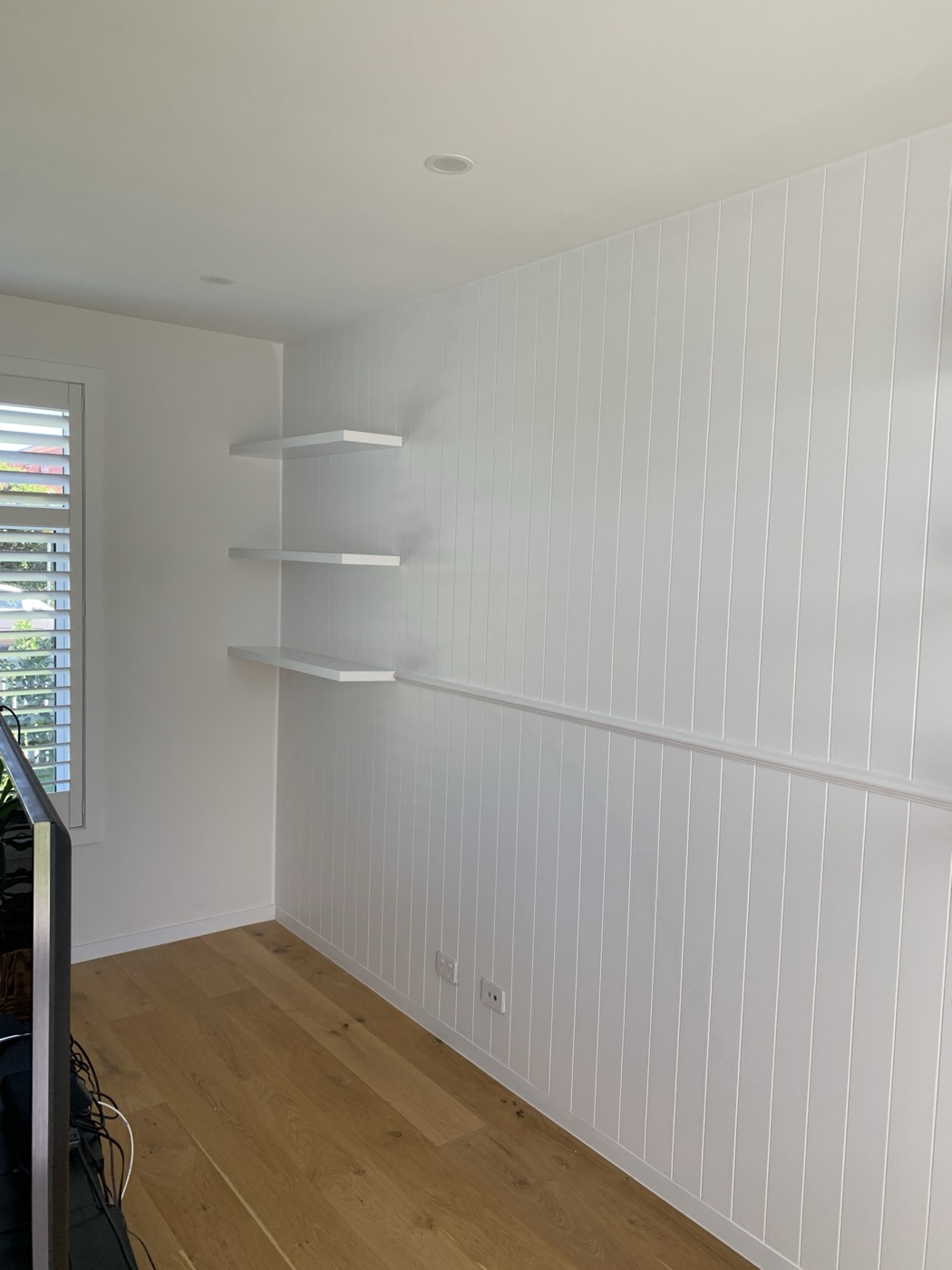
VJ Panelling and Feature Walls: What They Cost and How They're Installed
Vertical joint (VJ) panelling has become one of the most requested carpentry jobs across Melbourne homes — and for good reason. It's one of the few upgrades that genuinely transforms a room for a relatively modest cost, works in almost any style of home, and holds up well over time when it's installed properly.
What VJ panelling actually is
VJ panelling is timber boarding with a distinctive vertical groove between each board, traditionally used on hallway walls and wainscoting in older Australian homes, and now popular as a feature wall treatment in bedrooms, entries, living areas and even bathrooms (with the right finish). It reads as classic without being dated, and pairs well with both period and modern interiors.
What actually affects the cost
- Wall size and complexity. A straightforward flat wall costs less than one with windows, power points or doorways to work around.
- Panelling height. Full-height panelling uses more material and labour than a half-height wainscot treatment.
- Material choice. MDF panelling is the most budget-friendly and paints beautifully; solid timber costs more but offers a different texture and durability.
- Finish and trim detail. A simple square-set top vs. a moulded cap rail or picture rail adds both material and installation time.
- Whether shelving or joinery is built in, as floating shelves integrated into a panelled wall (a popular combination) add to the scope.
How it's actually installed
Done properly, VJ panelling isn't just glued boards on a wall — there's real preparation involved that determines how it looks and holds up long term.
- Wall preparation first. The existing wall needs to be reasonably flat and sound before panelling goes up, or imperfections telegraph through.
- Setting out the spacing. Getting the vertical groove spacing even and symmetrical around the wall's features (doors, windows, corners) is what separates a professional job from an uneven DIY attempt.
- Proper fixing. Panelling needs to be securely fixed to studs or solid backing, not just adhesive alone, especially for full-height installations.
- Filling, sanding and painting. The finish coat is what makes the grooves crisp and the surface look intentional rather than rough.
Where it works best
Hallways and entries remain the classic application, but feature walls in bedrooms and living rooms have become just as popular — often behind a bed head or television as a textured backdrop. Half-height wainscoting in dining rooms is a strong, timeless choice. In bathrooms, it can work too, but needs the right moisture-appropriate material and sealing to hold up.
How JT approaches VJ panelling
- Proper setout before installation, so spacing looks intentional and symmetrical around every feature in the wall.
- Material advice based on the room — where MDF suits, and where a moisture-appropriate option is worth the extra cost.
- Carpentry and painting in-house, so the whole job — from the first board to the final coat — is one team, one visit sequence.
- Real, often-instant quotes once we know the wall and the finish you're after.
If you're considering a feature wall or hallway upgrade, VJ panelling remains one of the best-value carpentry jobs available — worth a conversation about what it'd look like in your space.
Thinking about a feature wall?
Proper setout, honest advice, quoted fast — often instant.