
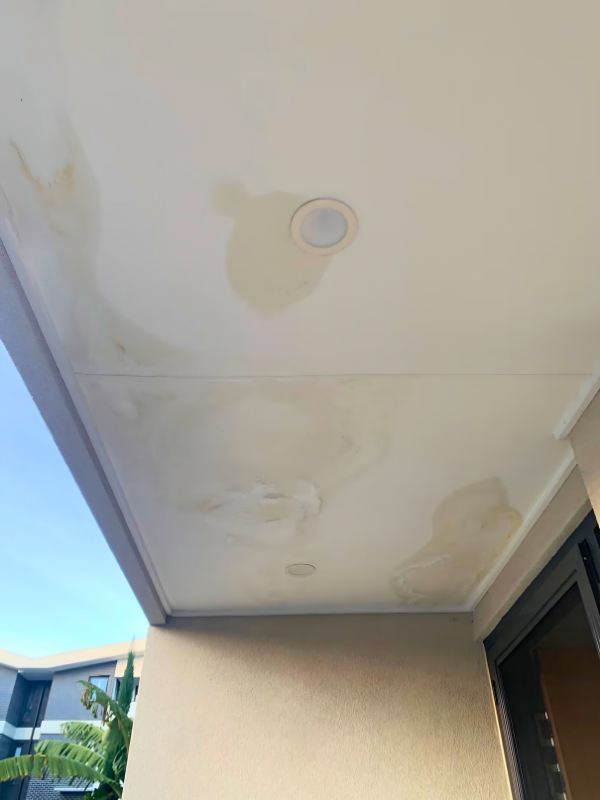
Water-Damaged Ceiling? What Causes It and How It's Fixed
A brown ring on the ceiling, sagging plaster, paint that's started bubbling — a water-damaged ceiling always looks worse than most people expect, and the natural instinct is to just paint over the stain and hope it doesn't come back. It almost always does, because the stain itself was never the actual problem.
What's usually causing it
- A roof leak. Missing or damaged tiles, deteriorated flashing, or a failed roof membrane letting water in during heavy rain.
- Blocked or damaged gutters. Overflow from a blocked gutter can track back under the roofline and show up as a ceiling stain well away from the actual blockage.
- A leaking pipe above. If there's a bathroom or wet area on the level above, a slow leak from ageing plumbing can show up as ceiling damage below, sometimes long before anyone notices water where it started.
- Condensation and poor ventilation. Especially in bathrooms without adequate extraction, ongoing moisture build-up can damage the ceiling even without a single active leak.
Why "just repaint it" doesn't fix anything
A fresh coat of paint over a water stain looks fine for a while — until the next heavy rain, or the same slow leak, brings the stain straight back through. Painting over the symptom without finding and fixing the actual source is the single most common reason people end up repainting the same ceiling stain two or three times.
How the cause actually gets found
- Check the roof and gutters above the affected area first, since gravity means the source is usually somewhere above, even if not directly overhead.
- Rule out plumbing if there's a wet area on the floor above — a slow pipe leak behaves very differently to a roof leak and needs a different fix.
- Assess the extent of the damage to the plaster itself — sometimes it's just staining that can be sealed and repainted; sometimes the plaster has genuinely weakened and needs replacing.
- Confirm the source is actually resolved before doing the cosmetic repair — repairing the ceiling before fixing the leak just means doing the job twice.
What the repair actually involves once the cause is fixed
If the plaster is sound and it's just surface staining, a stain-blocking primer followed by paint is usually enough. If the plaster has sagged, crumbled or lost integrity, the damaged section needs to be cut out and replaced, then set and finished to blend with the surrounding ceiling — a proper plastering job, not just paint.
How JT handles water-damaged ceilings
- We find the actual source before recommending any ceiling repair — roof, gutters, plumbing, or ventilation.
- Every trade in-house. Roofing, plumbing, plastering and painting are all handled by the same JT crew, so nothing gets lost between separate contractors.
- Repaired properly, matched to the surrounding ceiling, so the fix is invisible once it's painted.
- Honest, often-instant quotes for the real scope, once the cause is confirmed.
If you've got a water stain that keeps coming back, the fastest way to actually stop it is tracing the real source first — not another coat of paint over the same problem.
Ceiling stain keeps coming back?
We find the real cause before repairing anything. A real quote, often instant.